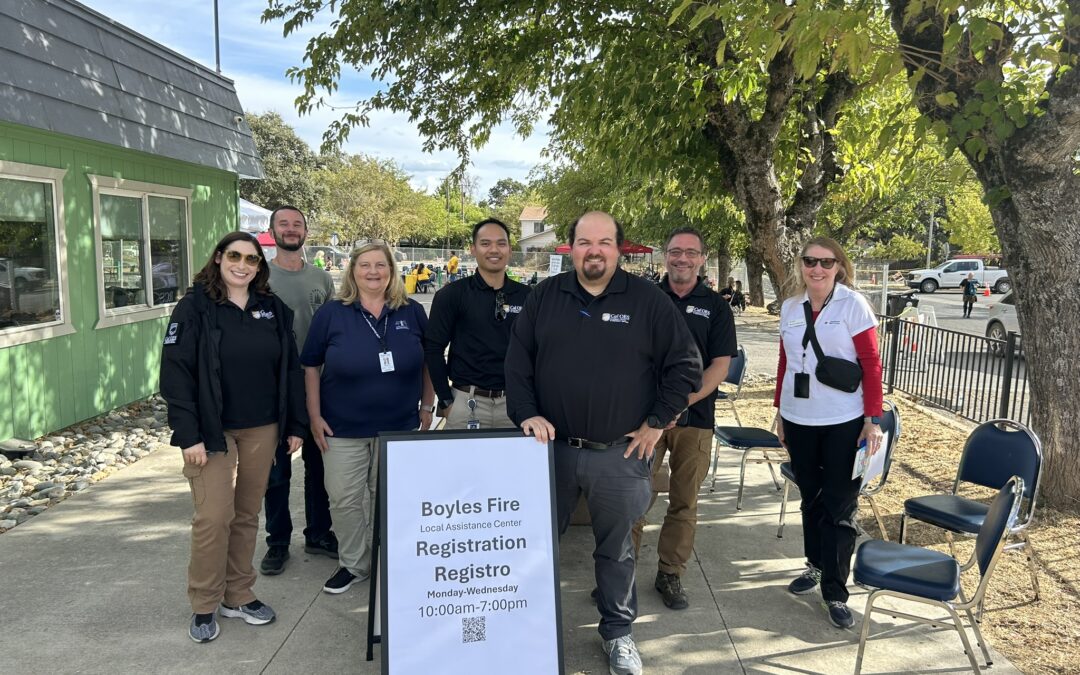
Every disaster is the most important disaster for those affected by it. For the people of Clearlake, California, a relatively small fire destroyed nearly 30 homes and instantly made many neighbors homeless and unsure of where to seek help. This was called the Boyles Fire and burned 81 acres, all through residential space. That’s when their city decided to open a Local Assistance Center.
If you’ve never heard of a Local Assistance Center (or LAC), you’re not alone. These temporary resource hubs are set up by city or county officials to provide specific resources to disaster survivors. Common entities represented are the Department of Motor Vehicles and the Franchise Tax Board. Agencies that can immediately be called on to solve a specific problem caused when documentation has been destroyed in a fire.
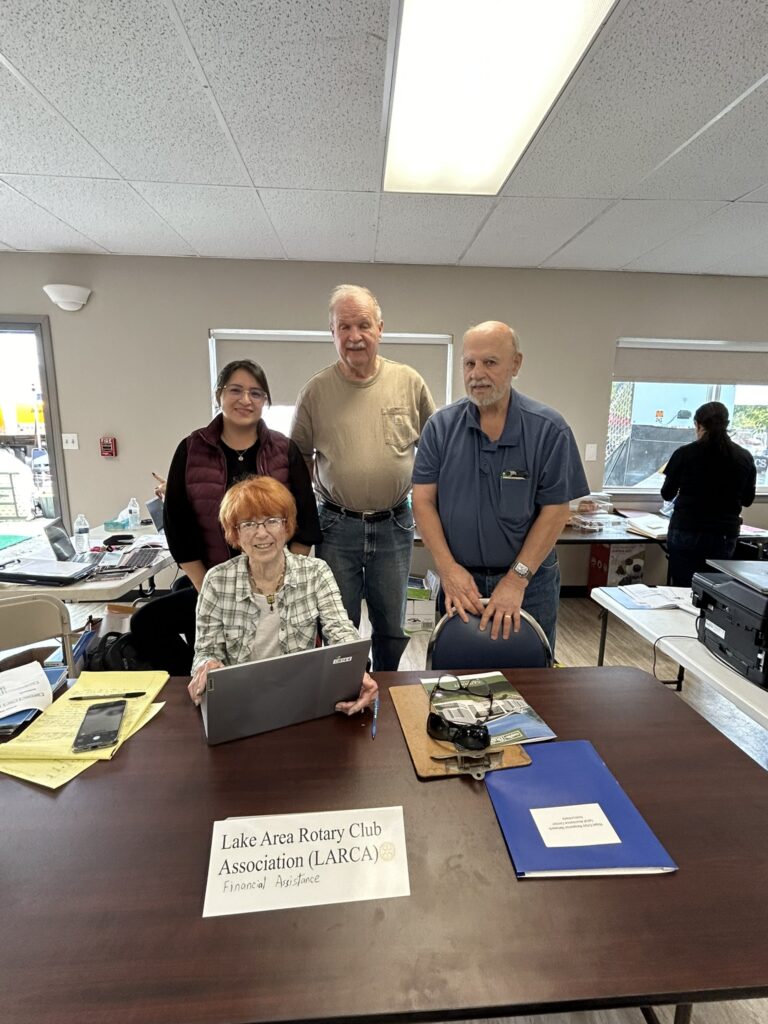
Nonprofit agencies make up an even more important part of any LAC. Before a disaster receives a formal declaration, it is nonprofits that bring in resources to serve the immediate needs of survivors. They provide clean up kits, phone chargers and even gift cards to help replace food lost during power outages. It’s these agencies that can have the biggest impact for a survivor in the immediate aftermath of a disaster.
HCRN deployed to the Boyles Fire LAC and brought our secure database to quickly and efficiently register fire survivors. Survivors register their information with HCRN, receive a name tag and wrist band denoting their damage level, before visiting the agencies represented at the Local Assistance Center. Each nonprofit has access to our system, and looks up survivors as they visit their table. They can see what resources have been given out by other organizations, and then provide their own.
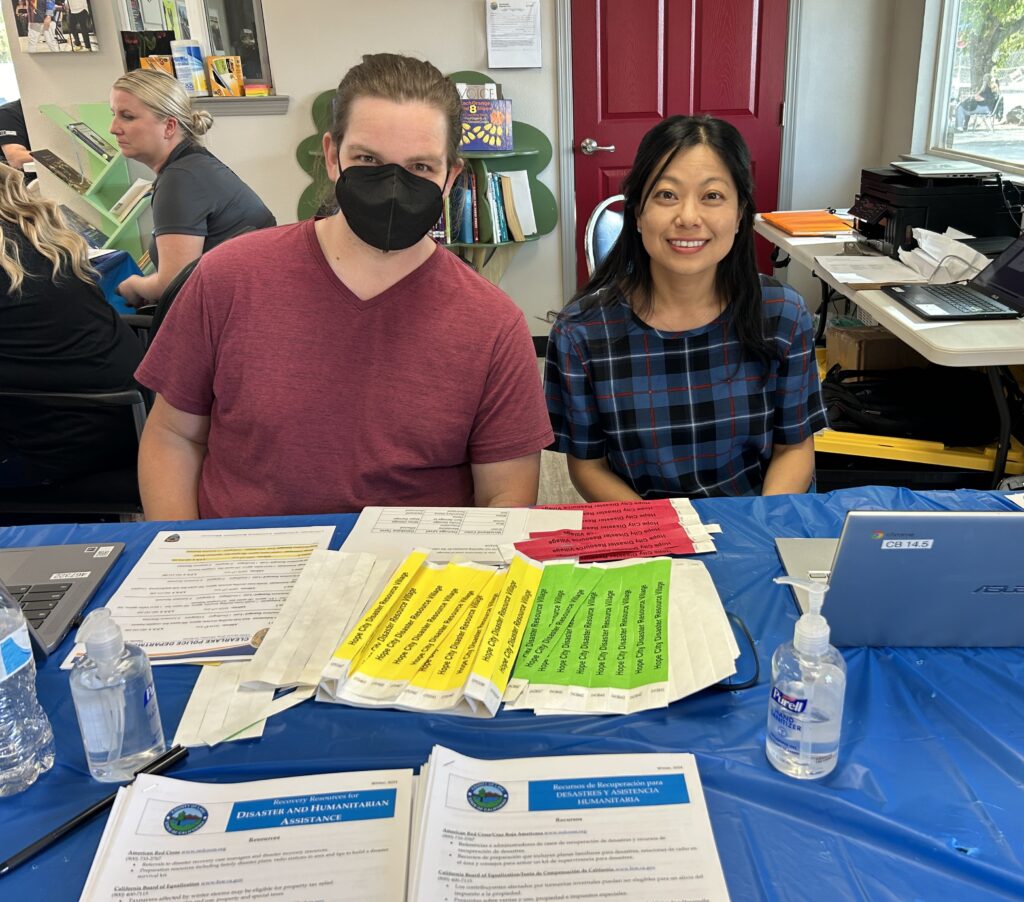
Why this system? The first reason is that it eliminates paperwork that would normally be filled out at each and every nonprofit a survivor would visit. With our single point of registration, we can streamline the entire time spent in the LAC, by reducing tedious and emotionally draining paperwork to the bare minimum. The second reason is that we can quickly triage a person’s case at the registration table and assign them a damage level wristband. One level shows they were evacuated, while the highest level shows a home was destroyed. This simple system means that survivors also don’t need to retell their story as they go between each agency.
HCRN is always working to improve disaster response. We can’t do that without our amazing partners, and people like you who support our work through donations.
 English
  Spanish
Recent Comments