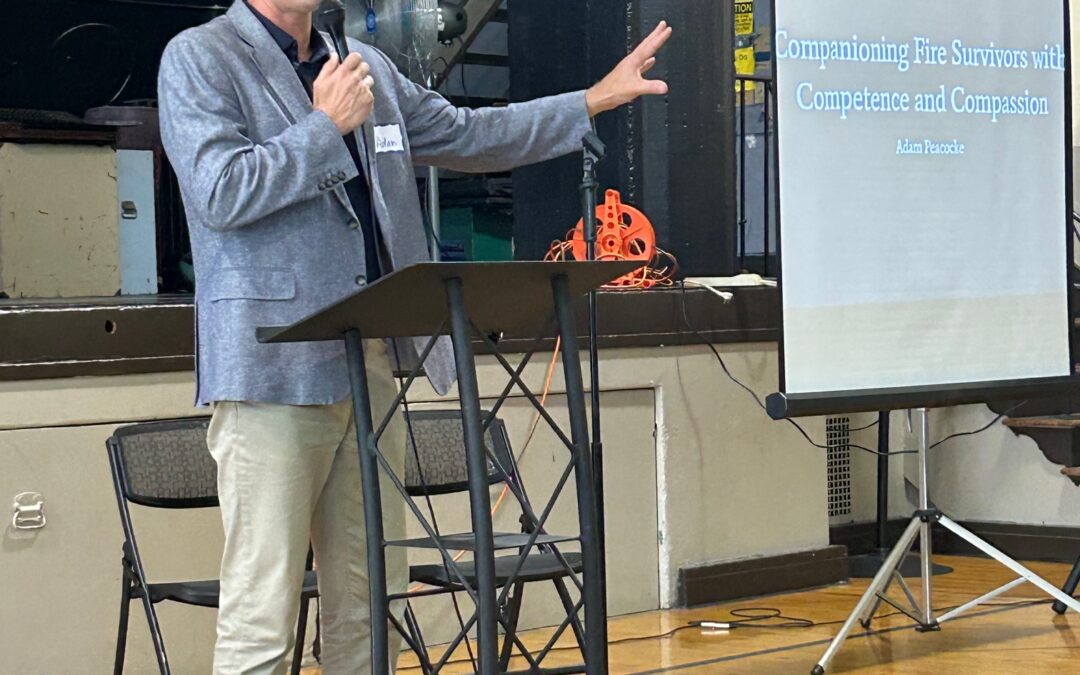
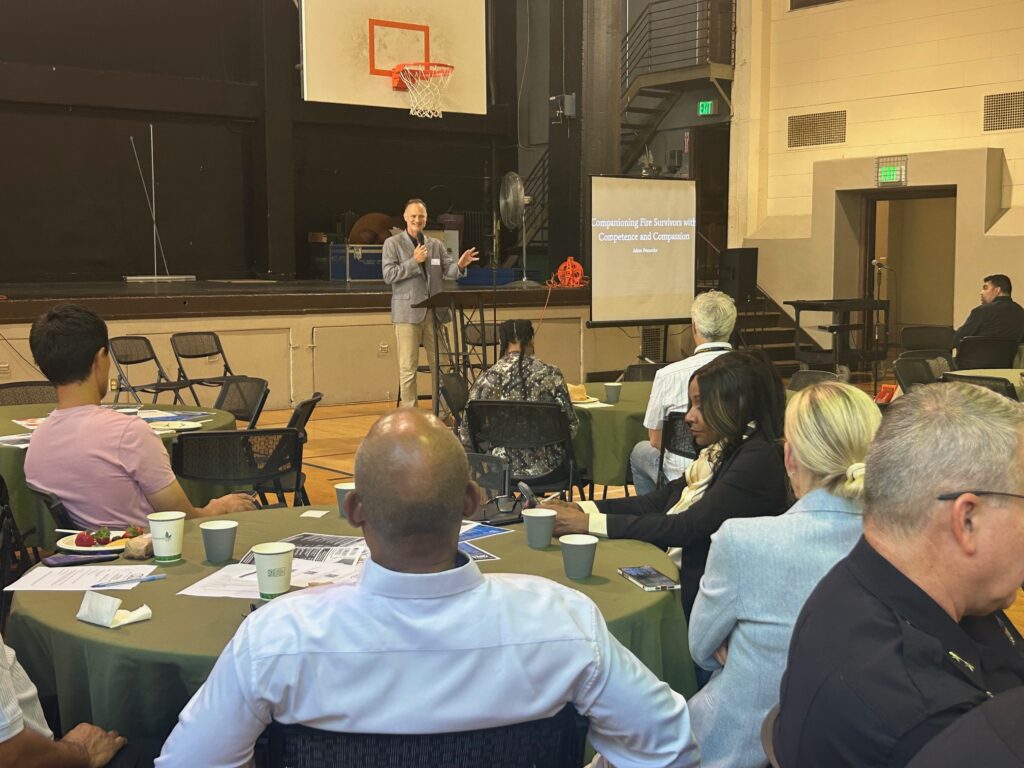
Hope Crisis Response Network brings hope to communities. Our work in disaster response and recovery includes bringing in experts from across the state and country to speak to local leaders about how they can respond to the needs in their communities. Last week we had the pleasure of sharing encouragement from Pastor Adam Peacocke with the Clergy Community Coalition (CCC) which includes faith congregations in Altadena and Pasadena.
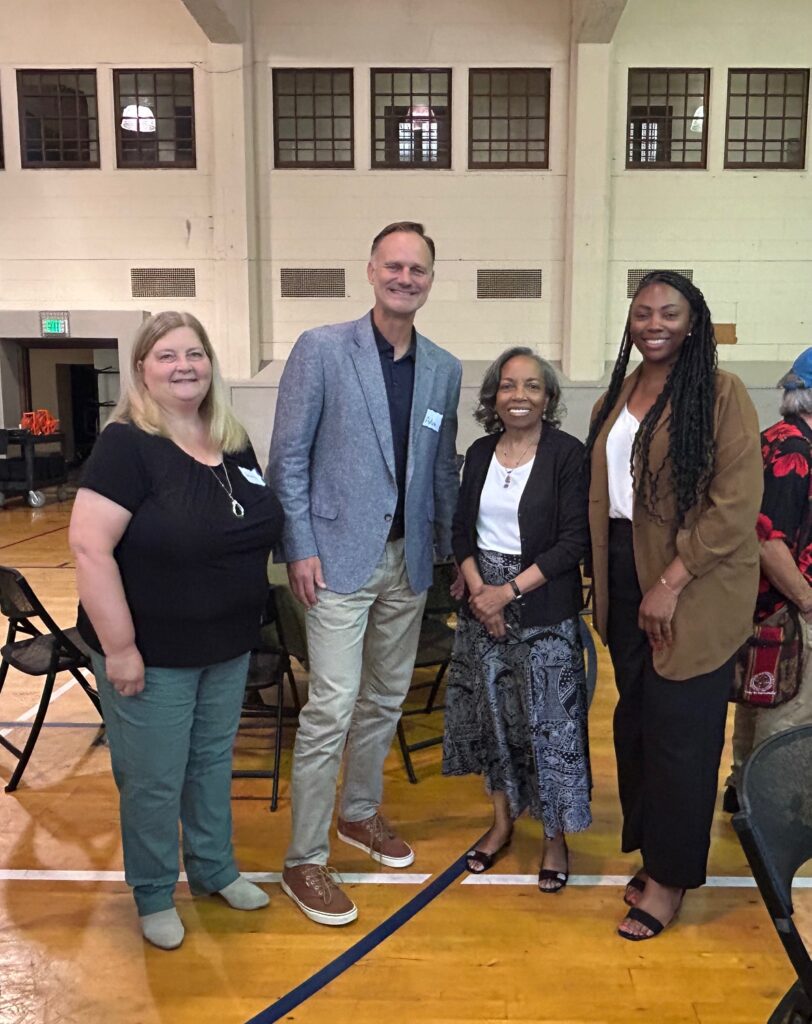
Peacocke brought a message of hope and encouragement for the pastors and leaders walking through difficult times. He encouraged them to lead with competence and compassion, listen to the needs coming from the affected families. He speaks from experience, having been integral to the Tubbs Fire recovery in Santa Rosa, California.
Peacocke used the metaphor of a marathon. “Long term recovery is a marathon and not a sprint, but at regular points along the marathon route there are stations that provide water and nourishment, that give strength to continue running forward.” If that sounds familiar, that’s because it’s a common refrain amongst disaster experts. It’s important to remind people not to wear themselves out too early in the process, and have a clear vision for the future their community needs.
Peacocke explained the timeline of disaster recovery to the 75 church leaders who were part of the monthly CCC gathering in July. He described the heroic beginning where people are responding and giving supplies and money to individuals and agencies responding to the fire. People show up to volunteer, they bring donations, they want to be part of helping their neighbors. But soon the dip in emotions comes in and the community faces disillusionment. This period is marked by despair, hopelessness and helplessness. The recovery process is hard, unknown and expensive and six months in, many are feeling these emotions in the Altadena area.
Peacocke lived the reality of this dip as a pastor in Sonoma County in 2017. Santa Rosa was devastated by the Tubbs Fire which destroyed more than 5,200 homes and displaced tens of thousands of residents. Peacocke co-chaired the Long Term Recovery Group which provided disaster case management to 1,500 families in Sonoma County. He has continued his work of mobilizing the faith communities of Sonoma County by creating the Sonoma County Faith Based Organizations (FBO) initiative.
He encouraged them to engage in actions that build community and connection. He shared about different activities that other disaster impacted communities have implemented. For example, in Santa Rosa, the churches connected with local schools and provided the back to school backpacks and supplies, but in the spring, they also provided a summer fun pack for students who had lost all their belongings. They hosted a family portrait day when families were allowed to come and get new professional photos taken. They delivered bottled water every week into the FEMA park, where families were lodged in travel trailers and used the opportunity to check in with those families each week.
His main points summarized were:
1. Hold to Purpose
2. Center on Survivors
3. Stay Grounded in Your Values
4. Resolve to Companion this Community to Recovery –Let’s not only offer help, let’s bring people home.
Some churches hosted monthly dinners just for fire survivors, where they would have a nice meal, a short discussion and spend time peer to peer with families facing similar situations. These activities helped to rebuild community, sometimes stronger than before the disaster.
The attendees were so appreciative of Peacocke’s encouraging words, personal experience, and examples of how they can impact their community. HCRN is so proud of our relationship with people like Adam Peacocke, and we’ll continue to bring these sorts of speakers into the LA County Wildfire sphere, so local leaders can be inspired and create their own long term recovery plans for the people in their communities.
 English
  Spanish
Recent Comments